Essay
A Concierge Engineer for the House
3 min read ·
Every evening in our house ends with the same three questions. What do I have tomorrow? What's for dinner? Can I play Roblox?
The answers lived in four places: a school portal, a shared calendar nobody opened, a paper chart on the fridge, and whichever parent remembered. The problem was never missing information. Nobody could see it at the moment they needed it.
So I started from the outcome, not the app. Everyone in the house should know the plan without asking. Chores should get counted without chasing. Dinner should be settled before anyone starts cooking. And nobody should have to log in, install anything, or remember to check.
That pointed at the wall in the living room. Two old iPads, wiped, now run one page and nothing else.
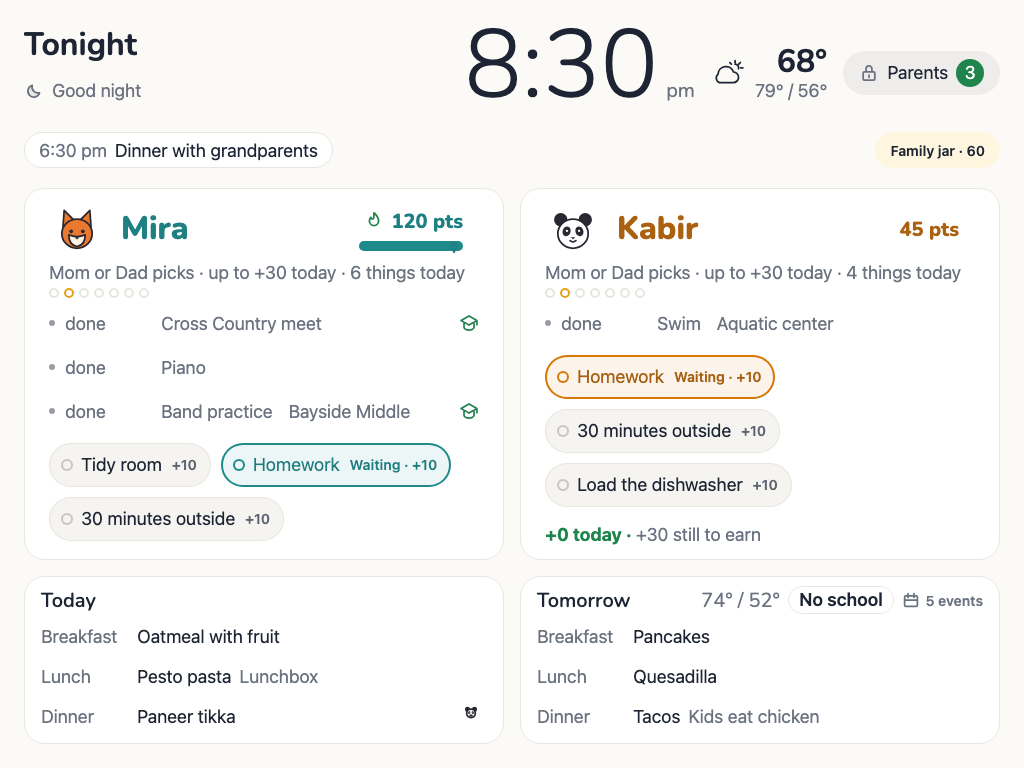
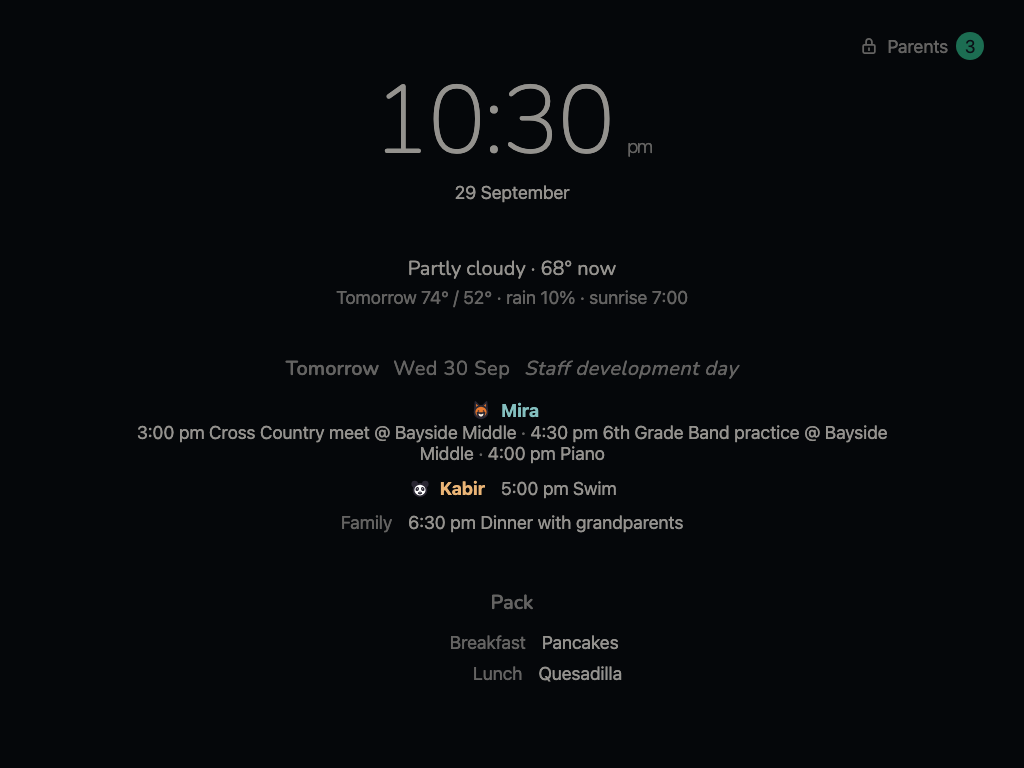
Tomorrow is visible tonight. By day the board shows what each kid has today and tomorrow, what we're eating, and the weather. After ten it dims to tomorrow's plan and what goes in the lunchbox. The calendars come in on their own, from school, from each kid and from us, so nothing is typed twice.
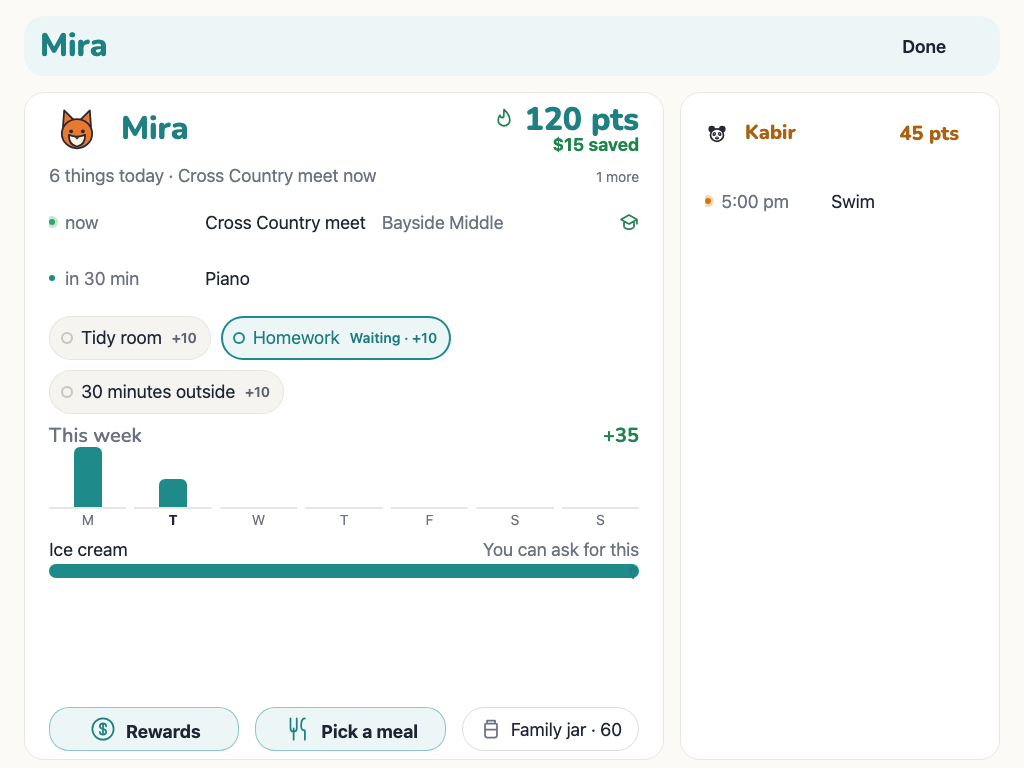
Chores get counted, not chased. A kid taps a chore when it's done. One of us approves it from a phone, and the points land on the wall a second later. I kept the approval on purpose: it keeps a parent in the loop, and it turns what used to be nagging into a tap. Points buy ordinary things, like ice cream, a bakery run, or five days of allowance.
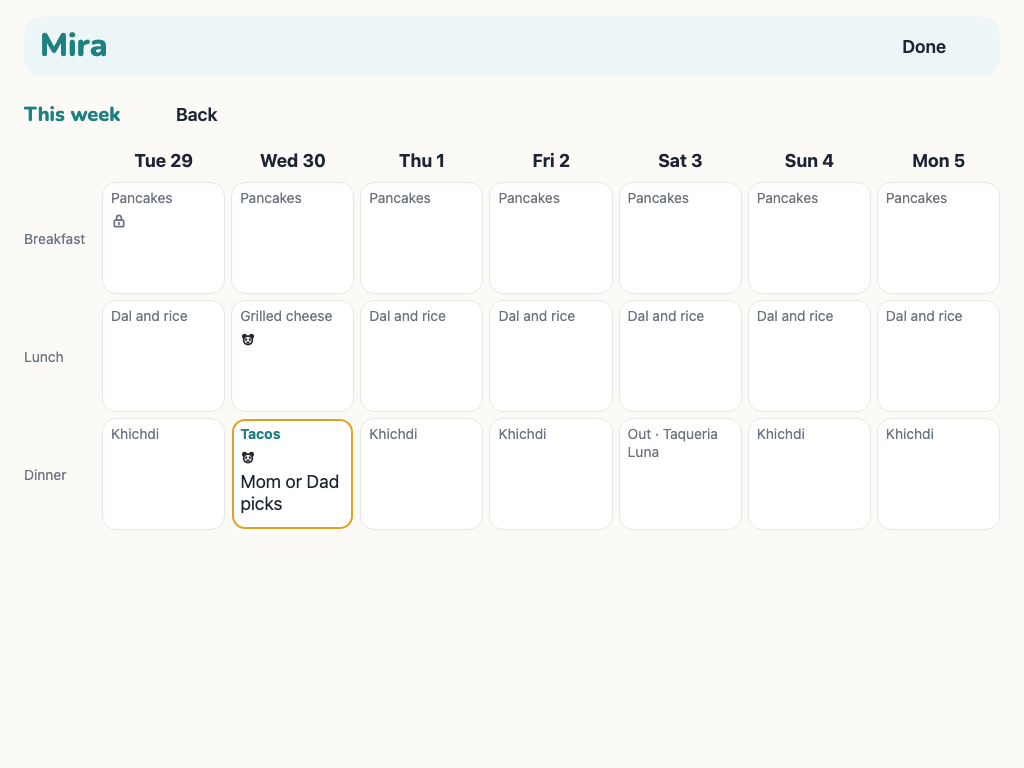
Dinner is settled by four. The kids pick the week's meals from a menu we keep. When they want different dinners on the same night, it lands on our list as a decision. Picks lock in time for whoever is cooking, and the menu already knows which days are vegetarian in our house.
What I left out mattered as much. No accounts, no cloud, no analytics; the only requests that leave the house fetch the calendars and a forecast. No model runs in it, so who earned what is a rule you can read in a file. And Roblox time sits in the shop switched off, because I won't promise screen time until something can enforce it. That is a separate project, The Same Shape, at Home.
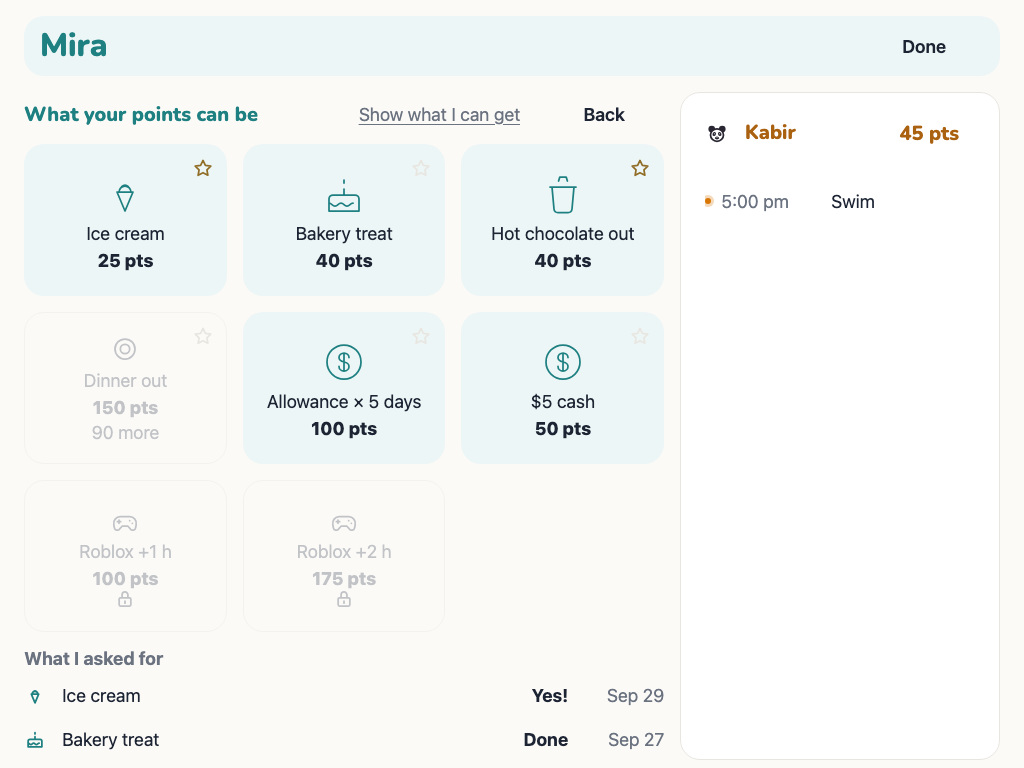
What AI changed. It felt like having a concierge engineer on call for the house. I built Mantel in five days with about thirty prompts to Claude Code. Each prompt was a small spec: the outcome, what not to touch, how I would check it. About half were about how it feels to a kid standing at the wall, not about code. The engineering is no longer the expensive part. Knowing what the house needs is.
That means a tool can fit one family, instead of a family fitting the tool. And it can stay private, because it never has to scale to anyone else.
On the third day I broke it, and the wall went dark at dinner time. The kids noticed before I did. That told me more than any test: they were already looking to it.
The code is public at github.com/ankgoyal-itus/mantel, with a demo family, if you have an old iPad in a drawer. Next, Roblox time the house can keep.
| Filed under | Building · Family · AI |
|---|---|
| Related | The Same Shape, at Home |